

Program 01
School Based Programs
Our Career Explorations and Career Catalyst programs bring hands-on career exploration with local mentors and individualized post-high-school planning into the school day.
Read moreWe support the small town ecosystem: public schools, young people, and small businesses.
What We Do
Program 01
Our Career Explorations and Career Catalyst programs bring hands-on career exploration with local mentors and individualized post-high-school planning into the school day.
Read more
Program 02
Our Next Step Scholarships help school-based program alumni pursue career-focused education, apprenticeships, training, licenses, and credentials after high school.
Read more
Program 03
Our Homegrown Ventures program will help young people launch and grow local businesses, creating jobs and building local wealth and reinvest in their communities and Magnolia Project by becoming the next generation of mentors. Launching in 2029.
Read moreLearn how to help young people find motivation, purpose and agency, and a path for life after high school.
Learn how our programs support local businesses, and keep resources circulating within the communities we serve.
View our annual impact report, and explore the data, stories, and outcomes that demonstrate our impact over time
Partner with Us
Your support helps young people discover meaningful careers, build a plan for life after high school, and access the education, training, and capital they need to thrive, while strengthening the communities they call home.

Magnolia Project turns small town potential into economic opportunity. We support the public schools, young people and entrepreneurs shaping the future of their communities.
Thriving communities with vibrant economies where every young person has the clarity, confidence and capital they need to fulfill their potential.
Our Theory of Change03

Hands-on career exposure & individualized post-high school planning
Strengthen students’ engagement in school and motivation to graduate by helping them understand how their academic learning connects to real-world opportunities.
Young people make informed post-secondary decisions and enter meaningful careers earlier.
Flexible scholarships for career-focused education and training
Accelerate young people’s entry into higher-wage jobs by directly removing the cost of education as a barrier.
Young people enter higher-wage careers earlier, have more disposable income and less debt.
Training, mentorship, technical assistance, and capital for entrepreneurs
Help young entrepreneurs access the training, support, and capital they need to grow early-stage businesses, creating sustainable revenue and pathways to wealth.
Entrepreneurs build businesses, create livable-wage jobs, strengthen local economic resilience and reinvest in their communities.
Our history04
Magnolia Project launches semester-long, school-based programming in partnership with Guerneville School District and Geyserville Unified School District.
Magnolia Project receives an investment from NewSchools Venture Fund and scales into Marin County.
Magnolia Project wins the Margoes Foundation Venture Philanthropy Award, a statewide prize.
Magnolia Project expands its school based programming to all six rural schools in West Marin thanks to a grant from the West Marin Fund.
Magnolia Project expands to Mendocino County and launches the Next Step Scholarship program.
We bring diverse skills, experiences, and perspectives to our work, but we’re united by one mission: expanding economic opportunity for young people and the communities we serve.
Staff01

Gia Biaggi founded Magnolia Project in 2022 through a High Tech High New School Creation Fellowship. A former middle school teacher, she has a B.A. from Kenyon College, and an M.Ed. from the High Tech High Graduate School of Education. She has held fellowships with Future Founders and the Watson Institute and received the 2017 Samuel Huntington Award for Public Service.

Monica brings 16 years of experience fostering learning and literacy among middle school, high school, college, and adult learners across multiple disciplines. She holds a bachelor’s degree in Latin American and Latino Studies from UC Santa Cruz and pursued graduate studies in Applied Linguistics at the University of Victoria in British Columbia.

Sophie DeWitt is a program strategist and community builder with experience in training, advocacy, and operational support. Before joining Magnolia Project, she coordinated training initiatives at Form Energy and led the international travel program at Moment. She is passionate about making complex programs clear, human, and actionable and building stronger communities through trust, care, and collective problem-solving.

Isabel holds a bachelor’s degree in Liberal Arts from Sonoma State University and gained hands-on educational experience working with young people in public school classrooms across Sonoma County and the YMCA during her time at Sonoma State. Witnessing the impact of positive mentorship and supportive educational programs inspired her commitment to educational equity and continues to motivate her work with Magnolia Project.

Skyler holds a bachelor’s degree in Liberal Arts from Sonoma State University, where she was the president Alpha Omicron Pi and gained experience working in classrooms across Sonoma County. Witnessing the impact of strong mentorship and supportive educational programs inspired her commitment to educational equity and her work with Magnolia Project. Outside of work, Skyler enjoys reading and watching the sunset.

Ashleigh has worked with nonprofit organizations and supported elementary and middle school students as a classroom aide and coach since she was in high school. She earned her B.A. in Sociology from Sonoma State University in 2024, where she was a Koret Student Scholar and completed an independent research study on symbolic exchange in work with children. At Magnolia Project, she draws on this background to empower students and create meaningful, collaborative programs.

Megan Tunzi joins Magnolia Project with 19 years in education, focusing on agriculture at the high school and college levels. She has a M.S. in Agriculture Science from Cal Poly, San Luis Obispo and maintains her Single Subject Agriculture Teaching Credential. She has been recognized as CATA Mentor of the Year (2021) and is excited to bring her passion to Magnolia Project. Megan credits much of her success to her grandparents and her agriculture instructors, who helped her explore different career options and supported her on her journey.
Careers02
We’re not currently hiring.
Interested in future opportunities? Send us your resume.
We’re deeply grateful to the many organizations and individuals that have supported Magnolia Project’s growth.


“We are grateful to partner with Magnolia Project as they help students learn, dream, and plan for their careers, merging experiential education with economic mobility for our future leaders”
Keep up with the latest stories, news, and updates about Magnolia Project and our work.
Coverage01
Videos, photography, frequently requested information and media coverage.
Video library01
Magnolia Project’s Career Explorations program in Tomales.
Watch on YouTubeMagnolia Project’s Career Explorations program at Guerneville School.
Watch on YouTubeProgram moments and student experiences at Elsie Allen High School.
Watch on YouTubeSee how career exploration brings real-world possibilities onto campus.
Watch on YouTubeStudents and local professionals share perspectives during Magnolia Project’s Middle School Visit Day.
Watch on YouTubeA year of Magnolia Project programs, people and partnerships.
Watch on YouTubeA look at Magnolia Project’s Career Catalyst program at Marin Oaks High School.
Watch on YouTubePhotography02
A growing visual record of Magnolia Project’s school based programs, students and mentors.


Press & media03
Magnolia Project advances economic opportunity, in partnership with public schools, young people and entrepreneurs through three programs: our school based Career Explorations & Career Catalyst programs, the Next Step Scholarship and Homegrown Ventures. Our programs work together to create a self reinforcing cycle of opportunity and reinvestment in the communities we work in.
Magnolia Project currently serves public schools, young people and communities in Sonoma, Marin and Mendocino Counties in Northern California. If you’re interested in bringing Magnolia Project’s programs to your community, please reach out to gia@magnolia-project.org.
Magnolia Project is funded through a mix of state grants, support from local and national foundations, individual philanthropic contributions, and fees from participating school districts.
We are always interested in building new relationships with public schools, entrepreneurs, funders and community organizations, and exploring opportunities to bring our programs to new communities. Please complete our partnership interest form here, and a member of our team will contact you within five business days to learn more and explore how we might work together.
Magnolia Project partners with local professionals, small-business owners and entrepreneurs who lead hands-on professional projects for the students in our school based programs. Mentors receive training, ongoing support and compensation for their time. Please complete our mentor interest form, and a member of our team will contact you to discuss upcoming opportunities.
Three interconnected programs, one long term vision: economic opportunity for young people and the communities we serve.
The Challenge01
Middle and high school students in small towns and communities outside of major metropolitan areas face geographic and economic resource barriers that leave them with two choices: remain in the communities that shaped them or leave for the “big cities” to find opportunities to build a career, networks, or investment infrastructure that gives their dreams a chance to succeed (Gallup and Walton Family Foundation 2025 study).
If we want young people from small towns and rural communities to thrive, not just survive, then they need a tailored ecosystem of economic opportunity that expands their reality of what’s possible, connects them to the capital needed to pursue their dreams allows them to reject the belief that a life in their hometown means economic and professional sacrifice.
Small towns02
Magnolia Project is proud to serve small towns and communities outside of major metropolitan areas. For us, “small town” is not defined by population alone.
“Small town” describes communities outside major metropolitan centers (such as Los Angeles, and New York) where economies are shaped by small, local businesses and employers and distinctive place-based industries, such as agriculture, tourism, food production and the skilled trades.
Our model and programs are specifically designed to overcome the geographic, and resource constraints that can limit young people’s access to opportunities in communities outside of major cities.

The ecosystem03
In partnership with public schools, young people and local entrepreneurs, Magnolia Project’s programs create a cycle of opportunity and community reinvestment. Students who explore careers become scholars and entrepreneurs. The businesses they join or launch become the next generation of mentors and scholarship sponsors.

In partnership with public schools, small business owners and entrepreneurs
Career Explorations & Career Catalyst
- School-based Program
- Hands-on career exposure, local mentorship, and an individual post-high-school plan
- Outcome: Informed Decisions — Meaningful careers, financial stability and personal fulfillment
A horizontal arrow connects Career Explorations & Career Catalyst to Next Step Scholarship.
Next Step Scholarship
- For program alumni only
- Flexible scholarship for career-focused education and training
- Outcome: Higher-Wage Careers — Less debt, more disposable income, and more local spending
Entry Point: Aspiring local entrepreneurs, age 18-35 separately points into Homegrown Ventures.
Homegrown Ventures
- Separate entry point
- Training, mentorship, technical assistance, and capital for entrepreneurs ages 18-35
- Outcome: Strong Local Businesses — Livable-wage jobs, economic resilience, and community reinvestment
There is no arrow making Homegrown Ventures a required next stage after scholarship. Each program's outcome connects to the shared bottom outcome.
Every young person has the clarity, confidence, and capital to fulfill their potential
Helping students discover their strengths, explore meaningful careers, and build a plan for what comes next.
What
Magnolia Project’s semester-long, hands-on Career Explorations and Career Catalyst programs connect 7th–12th grade public school students with new industries, educational and career pathways, and caring local mentors, strengthening academic engagement, incentivizing attendance and connecting learning to economic opportunity
How
Over the course of one semester, students build career readiness skills through Common Core-aligned lessons, a professional interview with a mentor, and a week-long hands-on project led by trained, compensated mentors from local businesses. Students explore postsecondary pathways through engagement with representatives from two- and four-year colleges, union apprenticeship programs, and other certification programs, reflect on what they’ve learned and develop an individualized plan for life after high school.
Impact
Middle and high schoolers develop a greater understanding of their strengths, educational and career interests, a stronger recognition of the connection between academic work and economic opportunity, gain confidence navigating professional settings, and make informed decisions about their future, reducing the time and money wasted pursuing pathways not aligned with their passions or goals.

Flexible scholarships helping Magnolia Project alumni pursue career-focused education and training after high school.
What
A $1,500-$3,000 cash scholarship for alumni of Magnolia Project’s school-based Career Exploration and Career Catalyst programs to help cover the costs of pursuing trade and vocational education, apprenticeships, certificate programs, licensing, and other pathways outside of traditional four year college.
How
Magnolia Project partners with Rotary Clubs and community funders in the communities we serve to raise money for flexible scholarships that can be used for tuition, fees, tools, equipment, transportation, and other expenses associated with postsecondary education outside of traditional four year college. Recipients are alumni of Magnolia Project’s school based programs, and are selected in partnership with their public schools.
Impact
Young people overcome financial barriers to completing the education required for their chosen careers, allowing them to enter into higher wage employment earlier, with little to no debt. These young people retain more of their earnings to spend, save and invest, increasing their financial stability. Communities, and small businesses benefit both from a stronger skilled workforce and increased local spending.

Launching in 2026-2027 school year.
In partnership with Rotary District 5130, Magnolia Project will award four inaugural Next Step Scholarships to alumni of our school based programs during the 2026–2027 school year.
Help us create more pathways to opportunity. We’d love to have you involved.
Seed funding and support for young entrepreneurs turning promising ideas into local businesses.
What
A training and investment program for young entrepreneurs (ages 18-35) living in Magnolia Project’s priority communities with a business idea they are ready to launch or an existing business they want to formalize and grow.
Impact
Young entrepreneurs receive the training, support and capital they need to launch sustainable businesses that generate income and create jobs in our priority communities. As these businesses grow, they become community assets, sponsoring Little League teams, community events and Next Step Scholarships, hiring alumni of the local public schools, and serving as mentors for Magnolia Project’s Career Exploration and Career Catalyst programs.

Launching in 2029
The Magnolia Project team is currently hard at work developing the Homegrown Ventures program and building partnerships with experienced organizations that can provide entrepreneurship education, mentorship, and technical assistance to young people in our communities. We plan to launch our first Homegrown Ventures pilot in 2028.
Interested in helping us bring Homegrown Ventures to life as a program partner or a supporter? Contact us at info@magnolia-project.org
Get in touchMagnolia Project launched in 2022 in partnership with two rural school districts: one in Guerneville (population 4,550) and the other in Geyserville (population 800), in Sonoma County, California, located about 90 minutes north of the Golden Gate bridge.

Despite being physically proximate to the San Francisco Bay Area, Sonoma County’s economy is structured very differently: relying more heavily on small, local businesses, agriculture and tourism rather on large corporations and concentrated industries (like technology or finance) found in major metropolitan areas. Approximately 87% of Sonoma County’s employers have fewer than 20 employees. (U.S. Census Bureau, 2023 County Business Patterns)
50% of Sonoma County’s public school students are qualified as socioeconomic disadvantaged; within Magnolia Project’s school-based programs in Sonoma County, 70% of participating students come from low-income households and qualify for free or reduced-price meals (California Department of Education, 2025–26 Student Poverty Data)
In Sonoma County, Magnolia Project serves young people, their public schools and their communities in unincorporated West Sonoma County: Guerneville, Monte Rio, Cazadero, and Fort Ross, Geyserville, Santa Rosa, and the Sonoma Valley and its surrounding unincorporated communities.
“Ginnie and Peter Haas Jr. believe that all young people deserve opportunities to discover their potential and prepare for meaningful careers. Magnolia Project's gives students’ valuable hands-on experiences that help them explore career options. We are happy to join others in supporting their efforts to expand educational and economic opportunity in Sonoma County.”
County map02

Community gallery03
A look at learning across Magnolia Project programs.


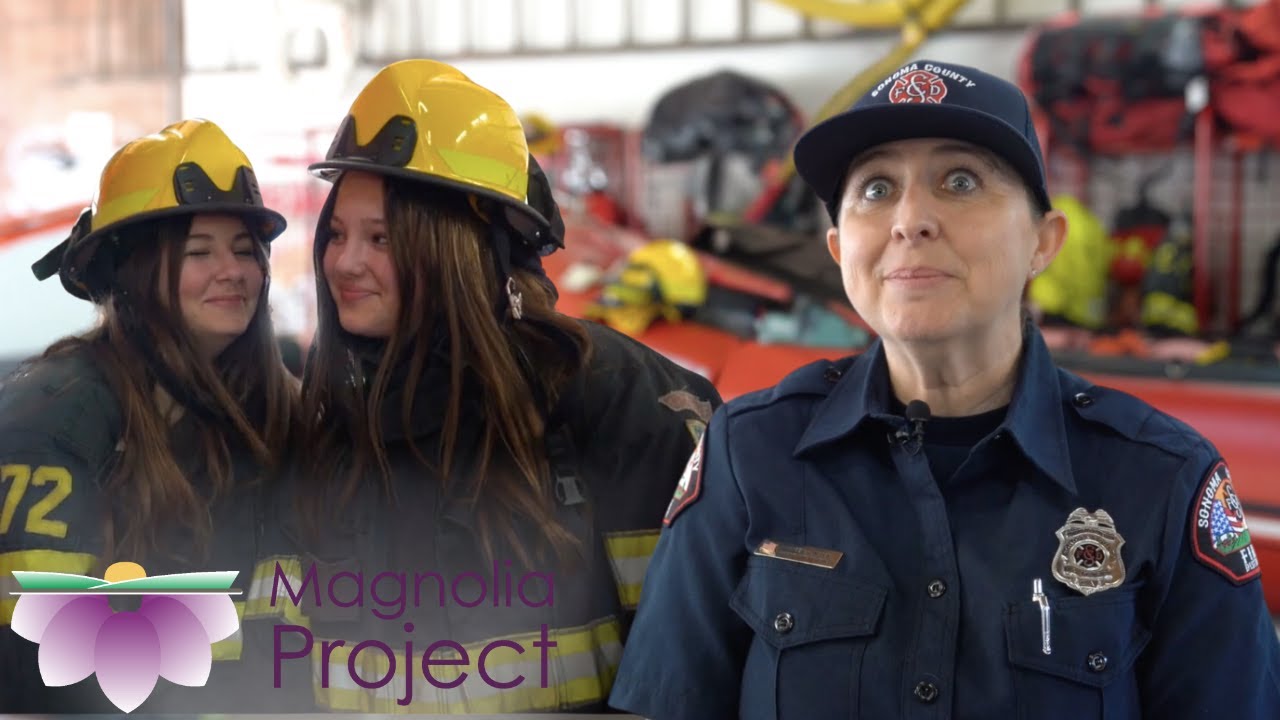
Magnolia Project expanded into neighboring Marin County in 2023, initially partnering with Novato Unified School District before expanding our work into all six public schools in rural West Marin in 2025.

While Marin County is much more closely connected to the broader Bay Area, opportunity is not distributed evenly across the county. Magnolia Project’s work in rural West Marin reaches public schools and young people in some of the county’s smallest and most rural communities, including Pt. Reyes Station (population: 895) and Tomales (population: 175).
Despite living in a wealthy county, young people in rural West Marin are often isolated from the nonprofit services, professional networks, and postsecondary opportunities available in other parts of Marin County (U.S. Census Bureau, QuickFacts; Marin Transit)
Similar to Sonoma County, Marin County’s economy is made up of small businesses: 89% of Marin County’s small businesses have fewer than 20 employees. (U.S. Census Bureau, 2023 County Business Patterns)
Approximately 36% of Marin County’s public school students qualify for free or reduced-price meals; across the seven Marin County public schools Magnolia Project serves, 57% of students qualify (California Department of Education, 2025–26 Student Poverty Data: Marin County)
In Marin, Magnolia Project serves young people, their public schools and their communities in Novato and unincorporated West Marin, including Tomales, Pt. Reyes Station, Nicasio, Bolinas, Stinson Beach, Lagunitas, and the San Geronimo Valley.
“Magnolia Project has been a wonderful success, bringing a burst of energy, connection, and opportunity to West Marin. Young people are discovering career paths they may not have known were available locally, while also expanding their sense of what is possible for them beyond West Marin. West Marin Fund is incredibly proud to have invested in Magnolia Project”
County map02

Community gallery03


Magnolia Project expanded into Mendocino County in 2026, partnering with Fort Bragg Unified School District to bring our model to Fort Bragg. This expansion is a natural extension of our commitment to serving communities outside of major metropolitan areas.

Mendocino County has an economy rooted in small businesses and natural resources, including agriculture, forestry, fishing, and tourism. 89% of Mendocino County’s small businesses have fewer than 20 employees, and Mendocino County has no businesses with more than 500 employees (California Employment Development Department, Industry Data; U.S. Census Bureau, 2023 County Business Patterns). Mendocino County’s size and dispersed population can make it difficult for young people to access non-profit services, professional networks, and college and career access programming and opportunities.
Fort Bragg, where Magnolia Project launched our Mendocino County programming, has a population of 7,000 and is about 4 hours north of the Golden Gate Bridge. At our partner district, Fort Bragg Unified, approximately 78% of students come from low-income families and qualify for free or reduced-price meals. (California Department of Education, 2025–26 Student Poverty Data)
Magnolia Project is proud to serve Fort Bragg’s young people in the 2026-2027 school year, while building a foundation for reaching more young people, public schools and communities in Mendocino County in coming years.
County map02

Community gallery03
A look at learning across Magnolia Project programs.


Impact data from our 2025-2026 school based programs
2025–2026 school year
Magnolia Project measures student growth through pre- and post-program surveys, student reflections and feedback from teachers and administrators.
Student growth
99%
of students report new or different career interests after participating in a Magnolia Project program.
89%
of students felt more confident setting goals for their own learning after participating in Magnolia Project.
75%
of students say Magnolia Project taught them things about career and college that they didn’t already learn at school.
73%
of students say Magnolia Project helped them further understand themselves and their goals.
92%
of students would recommend Magnolia Project to another student.
81%
of students rate the program an effective learning experience.
29%
of students aspired to a higher level of education post-program.
After participating in Magnolia Project, students most frequently reported gaining a more realistic understanding of what careers involve day to day.
Expanding What’s Possible
“Being able to explore new things helped me figure myself out, so now I’m able to look for a career I love.”Career Exploration Student
Values reproduced from the supplied student-impact report.
“Magnolia Project is something every student should experience. It’s super fun and helps kids explore future careers they’ve never heard about.”Career Catalyst Student
Our reach · 2025–2026 school year
Annual reports
Check out our impact reports from the 2024-2025 and 2025-2026 school years.
2026
A year of programs, partnerships, student outcomes and community investment.
2025
A year of programs, partnerships, student outcomes and community investment.
How Magnolia Project’s programs benefit the communities we serve.
Since 2022
Magnolia Project has brought more than $1 million dollars in new philanthropic investment to Sonoma, Marin and Mendocino Counties from funders that had not previously supported non-profits in our region.
Since 2022, Magnolia Project has invested more than $150,000 in local businesses through our school-based programs, paying professionals to share their expertise with young people while generating income for their businesses.

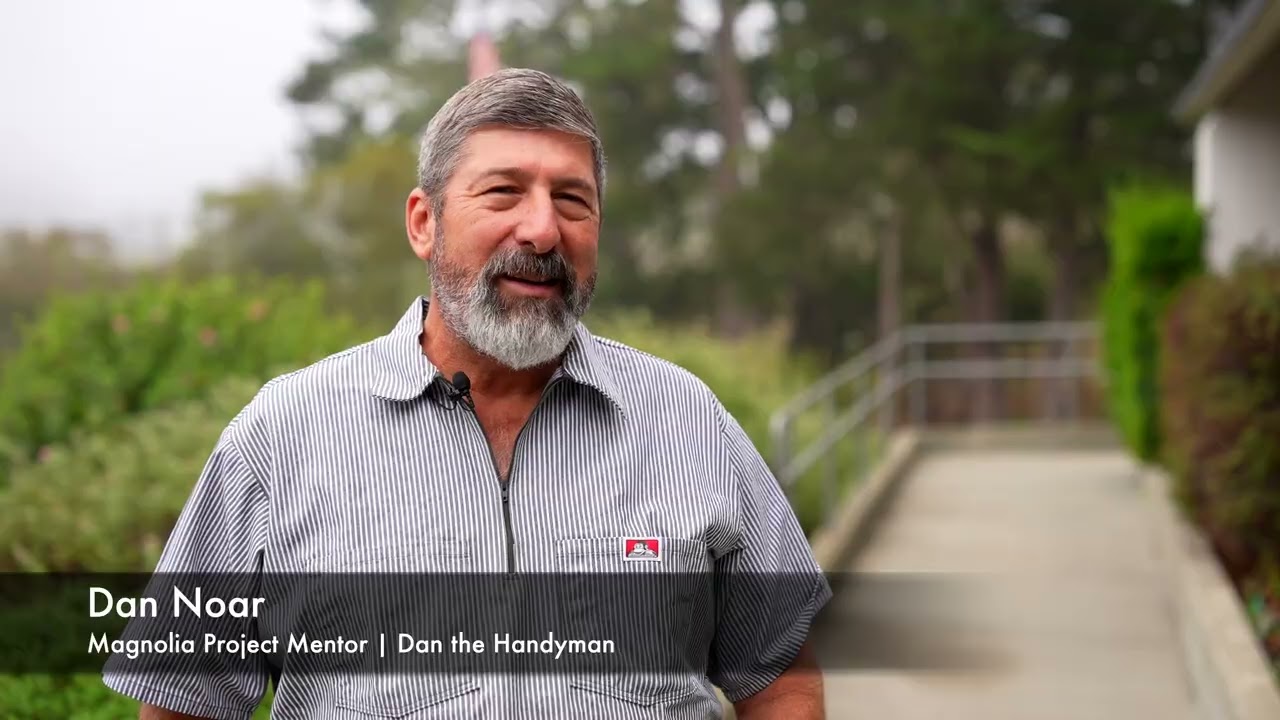
As a mentor with Magnolia Project, I’ve built relationships with teachers, school administrators, and other mentors, an ever-growing network of passionate, creative people to collaborate with. Working with Magnolia Project has also brought a new sense of purpose and credibility to my business, something both new and longtime clients notice and get excited about.
Shannon Marshall, owner, Sonoma County Sewing Company

Magnolia Project has really shown me how much I enjoy teaching and sharing what I know with young people. It’s also been a great way to meet people, make connections in the community, and keep learning, all of which helps me not only be a better mentor, but a better business owner.
Zona St. Pierre, owner, Spruce Grove Mud
Get in touch01
Give to Magnolia Project today to help young people in small towns explore careers, pursue education and training, and build futures in the communities they call home.
Your gift helps young people explore meaningful careers with caring local mentors, develop concrete plans for life after high school and access the education, training, and capital they need to create economic opportunity for themselves and their communities.
You can support Magnolia Project directly through Magnolia Project Forever, our fund at Marin Community Foundation. To make a gift of stock, please provide your broker with these transfer instructions:
Charles Schwab
DTC: 0164
Account: 5919-2755
For the benefit of: Marin Community Foundation
Broker fax: 1.888.526.7252
After requesting the transfer, email gifts@marincf.org with your name, the name and number of shares of each security, and the name “Magnolia Project Forever Fund”. This allows the foundation to verify the gift and credit it to the correct fund.
To give by wire transfer, contact Gianna Biaggi, gia@magnolia-project.org, or 415-501-0471 for direct instructions.
To recommend a grant to Magnolia Project from your donor-advised fund, contact your fund provider and provide Magnolia Project’s legal name, Magnolia Global Academy for Leaders, and EIN: 86-2917448. Questions? Contact Gianna Biaggi at gia@magnolia-project.org or 415-501-0471.


You can also donate directly through Give Lively using the link below.
Donate on Give Lively (opens in a new tab)How Magnolia Project handles the information you share with us.
Review draft · factual practices still need confirmation
The contact, newsletter, and resume forms in this review build are not connected and cannot send information. Donations are handled by Give Lively through its embedded form on HTTPS sites or the link to its hosted donation page. Payment information is entered with the donation provider, not an unconnected Magnolia Project form.
The current designs include fields for a name, email address, organization, topic, message, and an optional request for news. Give Lively may collect payment and contact information when you use its donation service. The information actually collected, the recipients, and the provider terms must be confirmed before publication.
This review build uses Google-hosted fonts, YouTube video embeds, and Give Lively for donations. YouTube and Give Lively may receive technical information when their content loads; county videos load after you press play and the donation widget loads when you open Give on an HTTPS site. Other media embeds can load with the document. Final hosting, analytics, newsletter, and contact-form practices still need confirmation.
Retention periods, request procedures, newsletter unsubscribe handling, and Magnolia Project’s privacy contact have not yet been approved. This draft must be updated from the verified launch configuration and reviewed by Magnolia Project before it is published as a final policy.
How this site is built to be usable by everyone, and how to tell us when it isn’t.
Review draft · not a conformance certification
Magnolia Project’s goal is a website that people can use across devices and with assistive technology. The review build includes semantic landmarks, keyboard-operable navigation and disclosures, visible focus styling, a skip link, reduced-motion support, and a control for the decorative homepage film.
Final video captions or transcripts, third-party donation and form experiences, Ashleigh Carrillo’s pending portrait, forthcoming diagrams, and a full assistive-technology review remain pending. Embedded third-party content may have accessibility limitations outside Magnolia Project’s control.
Please report an accessibility barrier to info@magnolia-project.org or call (415) 501-0471.
This statement describes the current design goal and known limitations. It does not claim full conformance or a completed independent accessibility audit.
Occasional updates, stories, and lessons from our work.


